
Our process
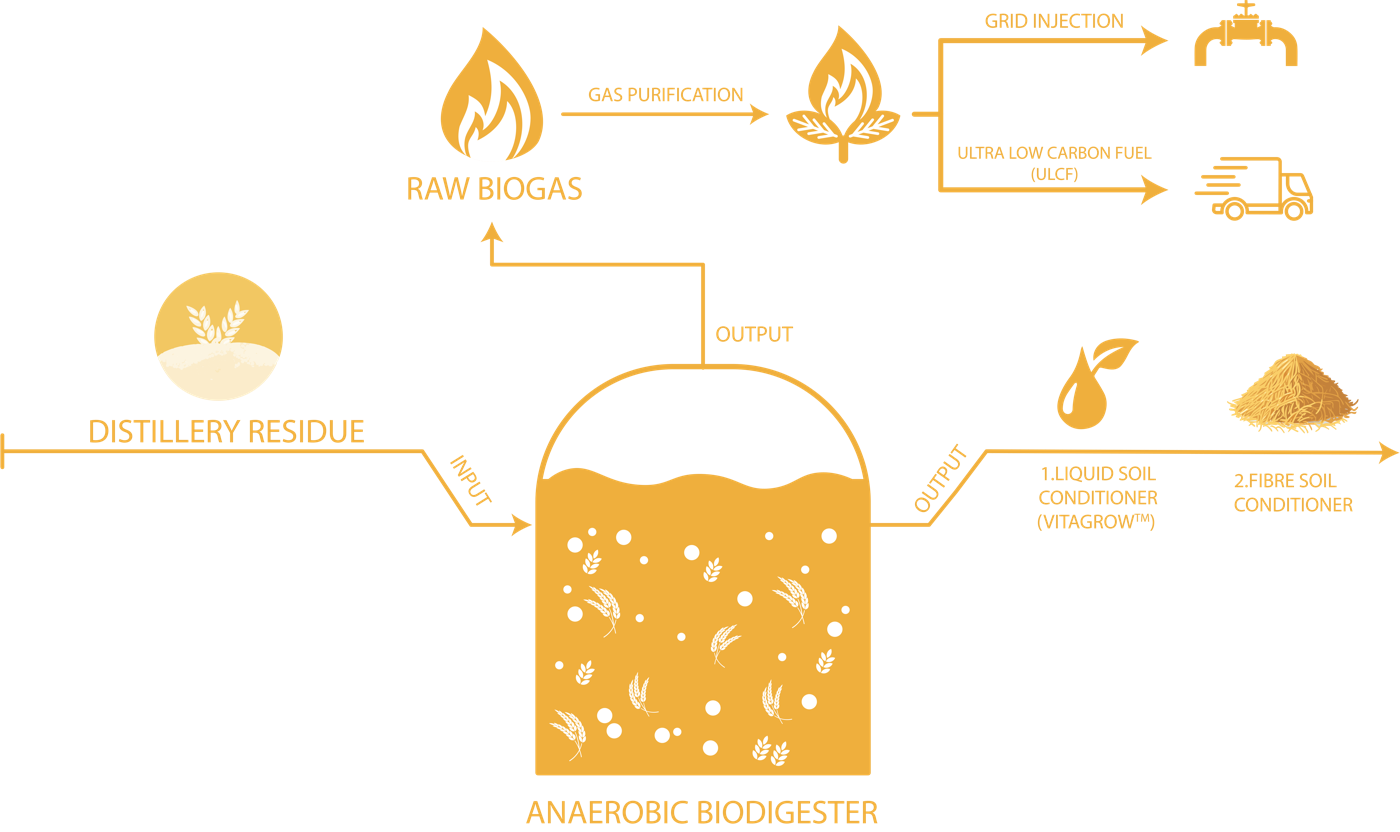
Anaerobic digestion is a naturally occurring biological process used to convert organic materials, such as distillery residues, into renewable natural gas and carbon dioxide in the absence of oxygen.
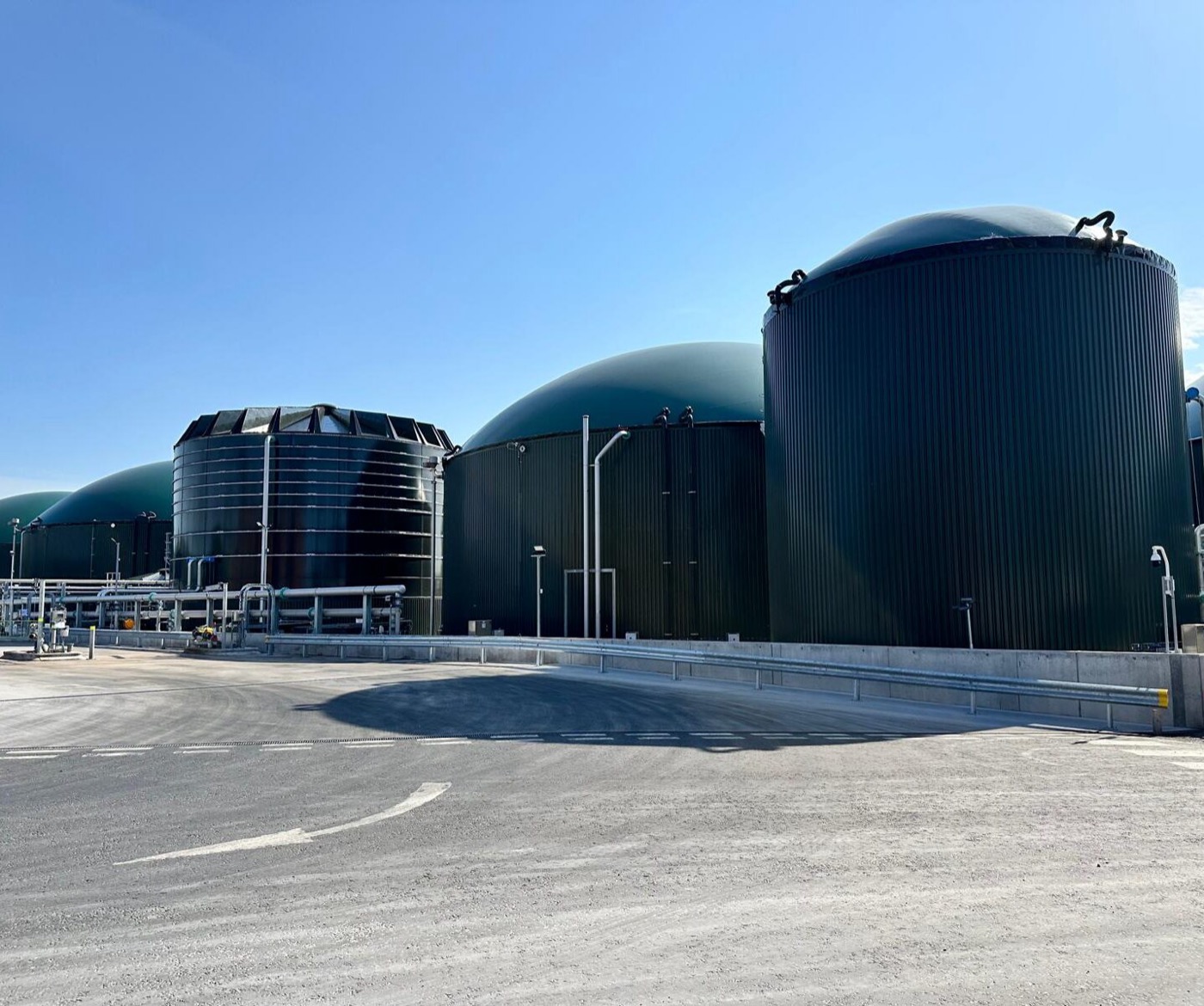
The first stage of the process is to mix distillery residues with recycled water creating a cereal solution. Stage two transfers the cereal solution to one of the anaerobic tanks where the microorganisms convert the organic material, through several natural biological steps, into a raw biogas. In stage three, the biogas is transferred from the sealed collection hoods to the gas cleaning plant, where the raw biogas is separated into methane and carbon dioxide. Finally, in stage four, the biogas is further processed to remove any final impurities before being injected into the gas grid as a renewable natural gas. The carbon dioxide can be recovered and liquified to be used in industry for fizzy drinks, dry ice and refrigerant systems.
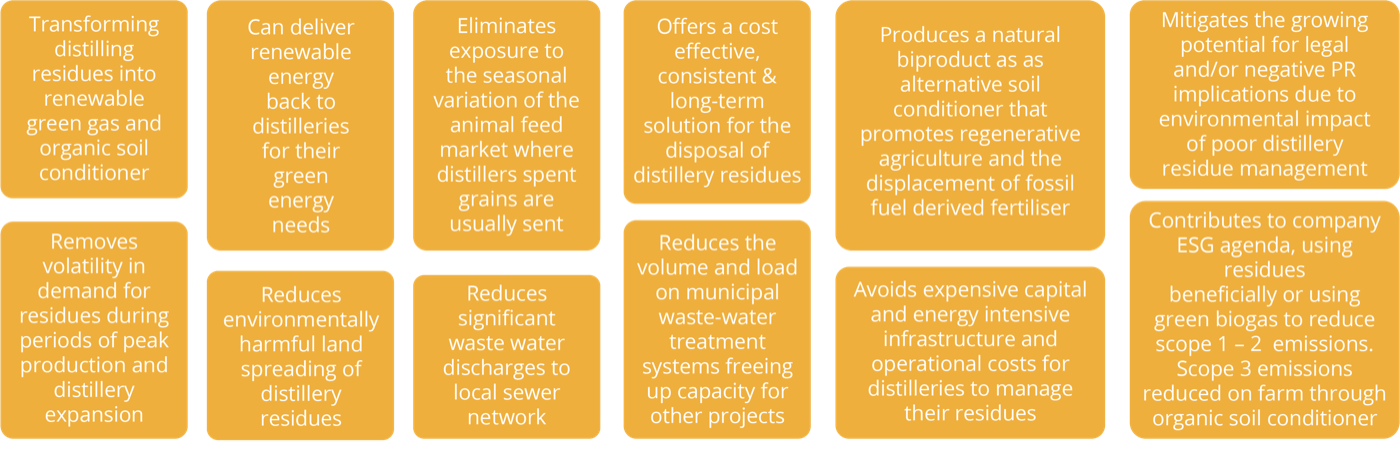
After the solution has undergone the biological process to produce biogas, there remains all the good inorganic nutrients such as nitrogen and phosphorus – the building blocks for growing plants. We recover these nutrients to produce Vitagrow™, an organic liquid and fibre soil conditioner completing a sustainable cycle for the growth of cereals for the distilling industry.
Regenerative agriculture
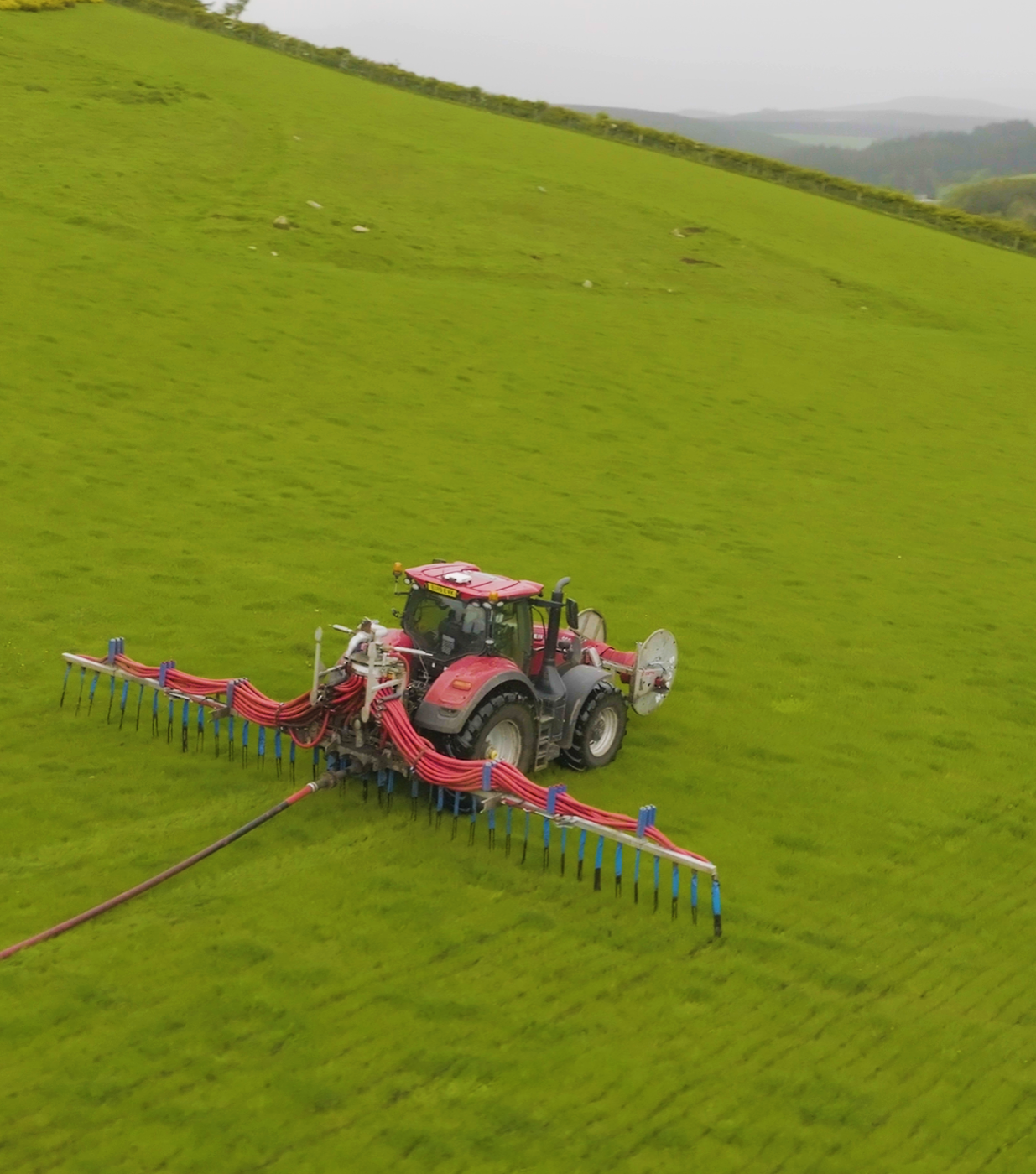
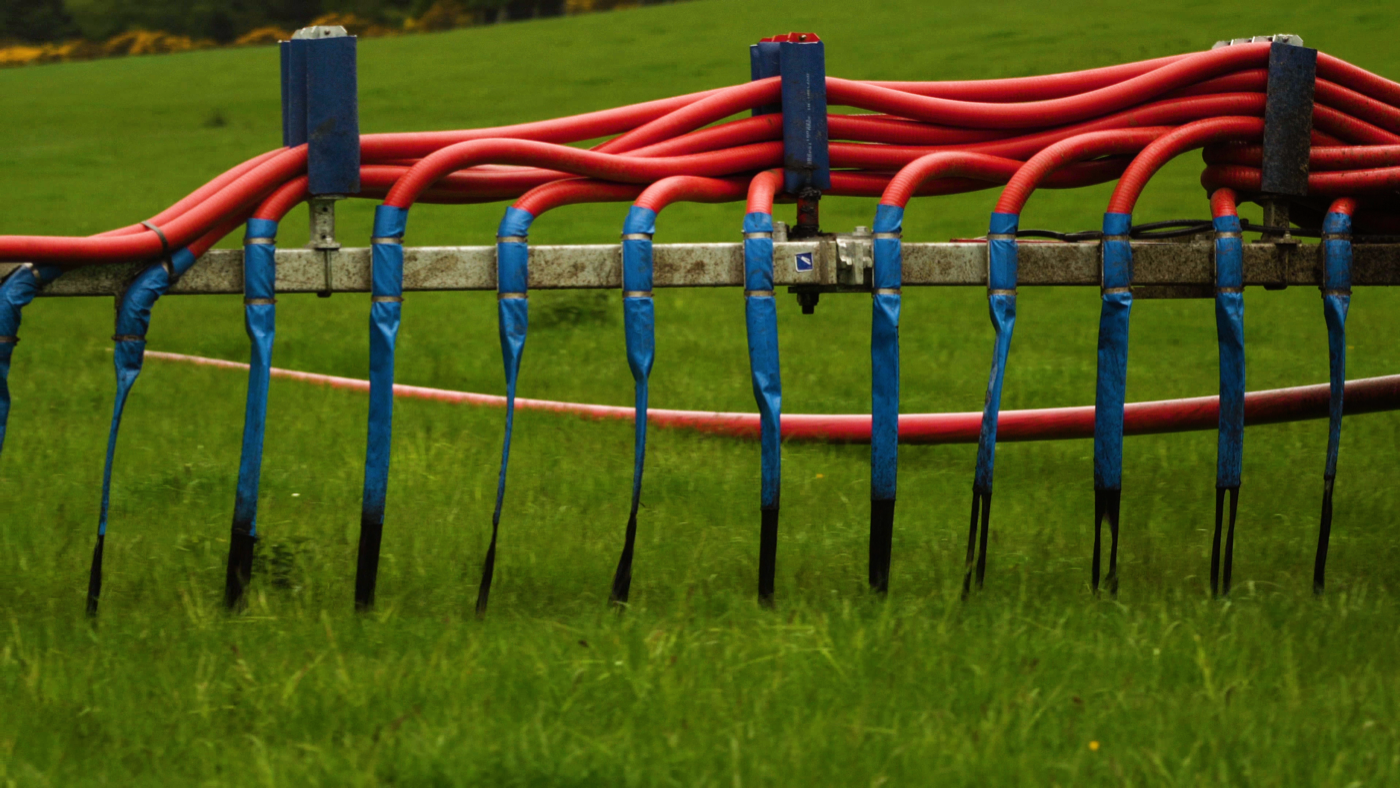
Our Vitagrow™ liquid and fibre soil conditioners support sustainable, regenerative local farming — replacing fossil-fuel-derived fertilisers and helping grow the cereals that feed the distilling industry.
Talk to our team about turning distillery residues into renewable natural gas.
Contact us